Thursday, 27 June 2013

I Have an Unsexy Illness


"Crohn's isn't sexy." "And other illnesses are?" "Yes! People walk around proudly supporting breast cancer with those bracelets that say 'I <3 Boobies'! But who would want to walk around supporting Crohn's and wear a bracelet that says 'I <3 Poopies?'"


There is a quote from John Green's infamous book The Fault in Our Stars. It is "illness repulses". I find this hilariously ironic, considering the characters in the book are diagnosed with cancer and are both described as being fairly attractive. Cancer is probably one of the sexiest diseases out there. I'm not saying it isn't a terrible diagnosis, it is, and I wouldn't wish it on anyone, but it has been romanticized by the media and publicized fund raising efforts. 

When's the last time you heard about a person with an unsexy illness being featured in a magazine or TV show? I'm talking about people who's illnesses are uncomfortable to talk about. Like, endometriosis when a woman's uterine lining literally falls out during her period? Crohn's disease where you spend more time running to the bathroom to experience bloody diarrhea than you do at work? or Kidney diseases that are treated so aggressively with steroids that the patients appearance is so warped by side effects they hardly resemble the people they were before the medical therapy? People who gain weight from their treatment, or get facial hair, or drool, or become incontinent, or who spend so much time in bed they get sores, or their muscles atrophy? Or people with mental illness who say inappropriate things or get aggressive or maybe don't say anything at all?

At least Mother Monster loves us. 

When I was searching for images for this post I typed "ugly disease" into google and the SECOND image that came up was this: 
Ouchey.

 I knew what it was, but I followed the link anyway, sure enough, that right there,, dear friends is a Crohn's Colon. We are LITERALLY THE GIVEN EXAMPLE OF AN UGLY DISEASE. Sadness.

It's sad that our society is so shallow that we can even discriminate attractiveness within a tragic category as chronic illness and disability, that is sad. The even more enraging thing is that even though I pride myself on being an assertive advocate for my health, I feel inadequate. Like I shouldn't be proud of having Crohn's the same way a patient with breast cancer can be. Why? Because my most prominent symptoms happen in the bathroom? Ouch. 

Why can't Crohn's be portrayed like this instead?

I don't have any answers for this, it's just some food for thought. I just wish our society wasn't so obsessed with the sexy allure of certain conditions while others get next to no exposure.   

Wednesday, 26 June 2013

My Super Power: Invisibility


"You look good!" "You say that to me no matter what I look like" "No, you actually look good!"


The phenomenon of the invisible illness is no stranger to many who suffer from chronic illnesses. Despite what a lot of activists may say, having an invisible illness is BOTH a blessing and a curse. 


Yes, it sucks that you look healthy despite feeling shitty on the inside. Yes, it blows that you have to literally convince people that you have a serious disease, syndrome or condition that literally qualifies you for disability status despite the fact that you're not in a wheel chair or emaciated or bald (hint hint nudge nudge cancer). Yes, it sucks that even better, sometimes,  you can't explain a cause, reasoning or cure for your illness.


It can be a HUGE advantage to have your super power of invisibility sometimes. This is how I choose to look at it. The blessings of having an invisible illness are almost as plentiful as the negatives.

Here is a list of positives to help keep the silver lining on your invisibility cloak:

  1. You don't have to tell anyone what you have or why you have it if you don't want to. I'm a person that values the ability to choose who I share my business with and who I don't. 
  2. You are not immediately stigmatized by your illness, you have the power to present yourself as a healthy individual, and take full advantage of NOT being labeled by your illness. This is especially helpful for things like job interviews, school applications, and first off meetings, I know my friends who suffer from mental illness feel me here.
  3. When you're healthy, you're really healthy. On the outside too. People who have chronic illnesses that impair their mobility can experience healthy times too, but they still display their illness on the outside much like a pregnant lady displays the sex she had 8 and a half months ago. 
But what happens when you lose your super power? I know how that feels. I'm currently going through daily steroid infusions to get me in tip top shape before I go on vacation with my family (YAAAAY!!!!!) but it means that they accessed my portacath and leave my IV in for 5 days. I live in a city where I walk everywhere, and it's hot right now. Yesterday it was 31 degrees Celsius (88F) with humity of 69%. So it wasn't like I was going to wear a turtle neck to cover my chest IV. Walking down the side of the road and literally having everyone, guys and girls check out your rack, oops I mean, IV site, makes me feel strangely naked. I'm not ashamed, or shy about having Crohn's, but I dislike the sympathetic smiles they give me when they meet my eyes, or their furrowed brows as I imagine them evaluating their day and thinking "Ok, my life isn't so bad". It's weird. I miss my invisibility. 

My invisibility gives me the ability not to be defined by the public as my disease. This is important because EVERYONE is more than their diagnosis. 

That way you know when he (or she) looks at you, its for you, not your illness. 


Tuesday, 25 June 2013

Chemotherapy


"Oh my god, your hair is so thin!" "Yeah, it falls out because I'm on low dose chemotherapy" "YOU HAVE CANCER?!?" 


I dislike chemo. I've never been on enough to go bald or have completely debilitating side effects, but I've been close. A common medication used to control many autoimmune diseases including inflammatory arthritis, cancer, and, you guessed it, Crohn's disease is called methotrexate. Given by a subcutaneous injection once a week, this medication was AWFUL! The normal side effects from chemo were present. I'd get really really nauseous, weak, achey, light headed and just generally felt awful for about 24 hours after my injection. So basically, it was like having a violent stomach flu once a week. Not exactly a great time when you're living 6/7 parts of life. 

After being on methotrexate for a couple of months I started to get anticipatory side effects. Yup, that is EXACTLY what it sounds like. BEFORE I took the injection I would start to get sick. Soon enough it started to spread into stuff that wasn't even related to my injection. If I saw colours that looked like the colour of the medication I would start to feel sick, I couldn't talk about the medication, I couldn't even think about it without feeling sick.

I had a funny experience when I went to a leadership retreat with a bunch of other young adults with chronic illness. Through conversation we deduced that about 3 or 4 of us had been on the ol' methotrexate. We talked about it for about 5 minutes, then all at once we all said "Can we stop talking about this?" And as I looked around, and grabbed a glass of water to settle my own stomach, I noticed the green tinge on my peers faces. Turns out I wasn't the only one to get anticipatory side effects.  

I am not including an image of methotrexate because well, I'm starting to feel icky after writing this post. You can google it!

Monday, 24 June 2013

The Dark Side of Peer Support

"What meds are you on?" "Remicade" "Oh, I was on that a couple years back, I hope it works for you"


The old saying "misery loves company" could have been written by people with chronic illnesses. However, I've found that spending too much time with other Crohnies can sometimes generate more misery than it alleviates.

As a young IBD patient, I was routinely recommended to attend IBD patient meet ups, which gave kind of a support group atmosphere. The problem is that if you cram a bunch of teenagers, with the exact same illness from a very small area into a room for a couple hours. Things get personal and angsty. Fast. 

These meet ups, instead of making me feel like I was less alone in having a chronic illness, and more justified and intensified my feelings of "why me?", anger and hostility towards my illness, body, and even caregivers. This was NOT a productive or enjoyable attitude to have. 

I made a certain friend who also had Crohn's and her outlook corrupted me to be untrusting to my doctor, and generally feel like "the world did this to me". It was awful.

Luckily after only a short time I realized how ridiculous this whole viewpoint was. I cut my ties with her, and have since been reluctant to make friends with other IBDers. 

However, I did NOT cut myself off from peer support. I find it extremely positive to connect with other people with chronic illnesses. When you're in a mix, everyone shares sympathies of difficulty dealing with the burden of illness, feeling isolated and depressed, dealing with medications and side effects and other commonalities. But no one shares the exact same doctor, exact same symptoms or exact same stories. 

This has been my way of finding peer support that actually benefitted me, rather than dragging me down into a dark abyss of negativity. 

Saturday, 22 June 2013

Alternative Therapies


"Have you ever tried meditation? A friend of mine has Crohn's and he meditates a lot" 


As a person with a chronic illness in the Western world, I'm all for traditional medicine. Perscribe me an idea, write me a script and gimme those pills. My Crohn's disease. however, has been uncooperative and typically unresponsive to most treatment plans, much like a resistant toddler to the idea of toilet training. I do not know the number of medications and treatment plans I've been on, but it must be more than 30 (not all at once, just over the course of my time with Crohn's). 

So naturally, a couple of alternative therapies have been recommended to me even by my traditional doctors. I've tried quite a few of them, all with mixed results, I think the key is to try and find the good in any treatment. 

Below I've listed some of alternative therapies that I've tried:

  1. Probiotics             
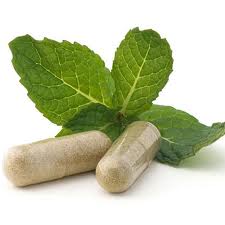
  • Taken in capsule form, the idea is that these probiotics balance the bacteria in your gut, therefore reducing symptoms of your IBD. Truthfully, I didn't notice any difference in my symptoms, and the probiotics weren't covered by my insurance and were expensive. Not worth it. 


     2.   Meditation
  • The idea of harnessing your inner healing power, to help control your disease is a little far fetched in my opinion. However, I do think the idea of taking time to clear your mind, free of stimulation, to reduce stress IS beneficial for your health. My problem is that I suck at clearing my mind. Like, REALLY suck. Maybe I just need to practice more. 


     3.  Therapeutic Massage
  • Therapeutic massage targets the muscles in the body, reducing the stress around them and can be effective in managing MANY types of pain. This happens to be my favourite alternative therapy that I have tried, I've been getting them for almost 5 years. Many insurance companies cover a finite number of massages per year and many salons do direct billing. I don't know how much of it is stress relief, how much of it is the reduction in my back pain from working on my muscles, and how much of it is just the wonderful feeling of getting pampered, but I have to say, I'm a fan.  

    4.  Acupuncture 
  • This method of alternative medicine originating back to ancient China involves sticking teeny tiny needles into very precise spots on your body to stimulate your nerves and brain and neurological feedback responses to control pain. I tried it. I didn't like it. I'm not a fan of needles, so it wasn't my preferred method of *alternative* treatment. Not to mention it was generally ineffective for me. My pain comes in waves, very intense pain, but it doesn't last very long. Acupuncture isn't really designed to target that kind of pain, so it isn't surprising that I didn't experience life changing results. 

Another thing that a lot of people with chronic illnesses use to ease their condition are herbal supplements. I personally haven't tried anything like that. No teas, no oils, nothing like that. Personally, I know how powerful some herbs can be, and I'm a little afraid to try them. I mean, what if they interacted with the meds that I'm already on and messed them up?  My doctors have never recommended them (not that they would), but they did say if I was considering taking them to check with them first, which I think anyone should do. 

My concern with the supplements directed by naturopaths and homeopaths is that it seems like a big cash grab. I've know people that were pouring absurd amounts of money into these herbs and didn't see a huge benefit. I'm talking like $60+ per container of capsules. Yikes.

My attitude towards treatment is always keep an open mind, but ALWAYS consult your doctor before starting any alternative therapy. 


Friday, 21 June 2013

Tube Feeding


"You can't eat for 3 months?!" "Nope." 

"Oh man, I couldn't do that."


In Canadian paediatrics, one of the most popular treatments for Crohn's disease is naso-gastric tube feeding. Basically, this means a thin, flexible tube is put up your nose and threaded down to your stomach. The left overs are taped to your face, and connected to a pump and then easily digestible solutions are sent down into your body. 


The theory behind this is perfect. The solutions (similar to Boost and Ensure) give usually underweight,  malnourished kids a huge boost in calories and vitamins, helping them recover from a flare. The solutions are so easy to digest that it gives the digestive system a chance to take a break and heal after being inflamed. 

But as good as this sounds, it's a brutal treatment option. I would know. I've been on tube feedings twice. You have to commit to not eating solid food for three months. You are allowed a finite amount of "clear" liquids to curb your cravings; these include chicken broth with no green bits, water, gatorade, light pop, clear popsicles, and three clear hard candies a day. 

This honestly doesn't sound too bad, you're not hungry when you're on the feeds, but you feel socially isolated. You don't realize how much of our lives revolve around food. It's everywhere. I missed eating dinner with my family so much. It was brutal. 

Another thing is that the tube feeding is very visible. People stare at you, people ask you what is on your face, one recently immigrated Iranian student in my high school thought my pump was a bomb...

You have to leave the pump hooked up about 22 hours a day, so it took a bit of time getting used to having to carry it every where and listen to it while I slept.

Also, because I was in my teens when I was on the feeds, I was expected to insert my own tube, when it had to be changed once a month. That's right, I now, have the skills to measure out tube, and feed it up my nose, and then down into my stomach. No, it's not easy, no it's not fun, yes, you gag.  

But I think the worst part about tube feeding for me was the fact that it didn't work. I was still symptomatic, and just plain miserable. 

I made it through a couple of months each time, but it was NOT a good treatment choice for me.   

Thursday, 20 June 2013

Top 10 Things to Bring to the Emergency Room

"Honey, I think I need to take you to the ER." "No, please, can we wait just a little bit longer?"


I've had my fair share of trips to the ER. Never for the normal reasons that someone ends up in a paediatric emergency room like a fall off a bike, reckless play fighting, or a scary cough. No, I came in with fevers, abdominal pain, and fainting. I resist going to the ER with every fibre of my being. I put off walking through those doors as long as I can for several reasons: the long wait, the uncomfortable beds, the procedures, but mostly I detest having to work with a new health care professional on account of my medical history being so complicated and specific. The poor ER doctors have to learn a LOT about in a very short period of time, and sometimes when I'm too sick, that can prove to be difficult.

Regardless, after all my trips I've learned to pack like an expert, to make the experience a little more bearable.

These are my top 10 items to bring to a visit to the emergency room, in no particular order:

  1.  Comfortable Clothing
    • Once, I fainted white volunteering as a research assistant and got taken to the ER via ambulance. I was wearing a dress and heels. WORST ER TRIP EVER. Your best bet is to wear comfy clothes like sweat pants, yoga pants, tank tops and bring a sweater that zips up (easy IV access). This will keep you from getting uncomfortable during your visit.
  2. Cell Phone Charger
    • Lots of hospital rooms have extra outlets designed for medical machines, but if they're not in use, save your battery and plug it in. You want to be able to text or call people when you find things out. 
  3. List of Medications/Therapies
    • This should be saved in your wallet, or even better as a list on your phone. It should include medication names, dosages, and how long you have been taking it. That way when the fourth person asks for your medications, you can just rattle them off like a skilled auctioneer. 
  4. Lip balm/Lotion
    • Hospital air is super dry from air conditioning, heat, and purification. You may not be allowed to drink water, so lotion and lip balm are often a saviour in those parched conditions.
  5. Clean Underwear
    • Sometimes, you just need to feel fresh after hours of sitting or lying in one spot. Not to mention I'd be lying if I said I'd never lost a pair of panties in the hustle and bustle of a health care centre. 
  6. Slip On Shoes
    • If you need tests done, sometimes you're asked to go to them. Quickly. Slip on shoes like clogs, sandals, or moccasins make it easy for you to get up and go, so you can get well and get out. 
  7. Book
    • You can only play so many levels of Angry Birds before you go a little crazy. A book provides non-repetitive entertainment. Chances are if you're a student, you will have readings for class to do, if not, just read for please. It's fun. 
  8. Headphones
    • Whether it's to tune out your room mate's incessant cough or to put on a relaxation app, headphones provide a tiny little world for your mind to go into when the ER becomes too much to handle. Just make sure its not so loud that when a nurse or doctor comes in to talk to you, you can still hear them. 
  9. Hair Elastics
    • A number of medical procedures and tests will have you in the most odd positions. "Lie this way, now flip over, move your leg here, we're going to put you upside down". If you're a lady with long locks (like myself) go for a topknot on your head. It keeps your hair out of your way and if you're on your back won't painfully dig into your head.
  10. Patience
    • Try to be patient. ER trips can be really long (I've waited for 8 hours before). Just remember that you're there for a reason, and the more helpful you are to the medical staff, the more helpful they will be to you. It's very difficult, but in the long run it will be the best option.